Monday, April 21, 2014
Piano Books and Curriculum
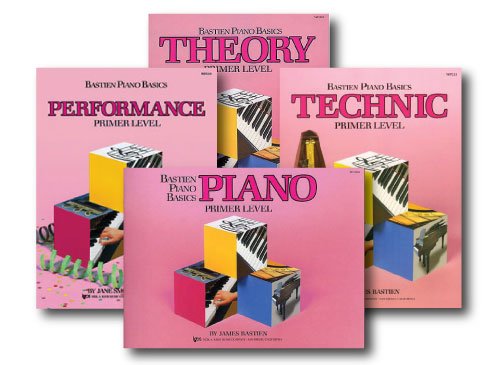
One of the first questions a parent will ask is, "What books do you use?"
 Tricky question. I don't believe that there's a "one size fits all" curriculum. For the young beginner, I prefer John Thompson's books, as well as Bastien. After completing the first level of beginning skills, I introduce the Suzuki method, along with Thompson's. I provide supplemental books, music sheets and other materials as needed. Ultimately, the student will play from multiple piano teaching series.
As the student progresses, in addition to the lesson books, they will be assigned extra sheet music. These pieces will typically consist of something current, trendy, or just "fun" to play.
You can purchase lesson books at Shevell's book store in Snowflake, or at Majestic Music in Show low. You will easily find them online, at a discounted price.


Monday, April 7, 2014
Lesson Information
Important Information For Parents and Students
♫♫♪♫♪♫♫♪♫♪♫♫♪♫♪♫♫♪♫♫♫♪♫♪♫♫♪♫♪♫♫♪♫♪♫♫♪♫
Attendance
Lessons are held at my home in my music studio. Your lesson begins
at the set scheduled time. For example, if the lesson is scheduled from 3:00 to
3:30 and you arrive at 3:10, the lesson will still end at 3:30. If you’re
unable to make it to the scheduled lesson, please call me ahead of time,
and I’ll be more than happy to reschedule for that week, or credit payment
towards the next month of lessons. When the student is a “no-show” for the
lesson and no prior notice has been given, I will not reschedule or credit
payment for the following month. Consistent attendance is a huge factor in the
success of the student!
Payment
Payment for lessons is due on the first week of the month ($52 per
student, per month). Checks need to be
made out to Amy Johnson. You may pay electronically via paypal, using the email
address aejonsn8@gmail.com. When you know ahead of time that you’ll need to miss a week, I’ll
prorate that month’s payment for you.
Practicing
at home
Each week your student will go home with a list of practice
assignments and tips. Some weeks there may be only one exercise, while other
weeks they may have several songs. We go over these in the lesson, and the
student is then expected to do these assignments at home. A good rule of thumb
for the beginner student is to have them play each assignment 3 times per day.
This should only take them a few minutes. If the student is confused about a
song or exercise, have them call me!
Passing
off songs
You can measure your student’s progress by the songs they’re
“passing off”. When the student is given a new song, it’s reviewed in the
lesson and expected to be practiced at home. During the lesson the following
week, they’ll play the song for me. When the student can play the song without
any cues, hints, or corrections from me, it’s “passed off” and they are not
expected to practice it anymore. Beginners should be able to pass off assigned
songs nearly every week, while more advanced students may have a song for two
months.
Contact
information
Amy
Johnson
p.o. box
1655
Taylor,
AZ 85939
(928)
536-5907, (928) 243-1215
“Life is like a piano... what you get out of it depends on
how you play it.”
♫♫♪♫♪♫♫♪♫♪♫♫♪♫♪♫♫♪♫♫♫♪♫♪♫♫♪♫♪♫♫♪♫♪♫♫♪♫
About Me
My Musical Beginnings
I was born and raised in Mesa, Arizona, and have always had a great love for music. My mother is an amazing singer, and I was raised with the gift of song as a constant companion.
The first instrument that I officially started to play was the cello. I participated in orchestra for 6 years.
I was born and raised in Mesa, Arizona, and have always had a great love for music. My mother is an amazing singer, and I was raised with the gift of song as a constant companion.
The first instrument that I officially started to play was the cello. I participated in orchestra for 6 years.
My journey with the keyboard began at age 10. I progressed quickly, and studied classical piano with Beverly Taysom in Tempe, AZ.
During these crucial years of piano study, I also learned to play the harp. The harp is so similar to the piano, these lessons gave a fine tuned advantage with my keyboarding skills.
Through participation with the junior high and 5A high school choirs, I had the opportunity to accompany at multiple events, performances, and competitions from a young age.
I studied voice with Shelle Soelberg, the founder and developer of the "Let's Play Music" program. Auditioning as an alto, I was able to perform in both regional and all state choirs of Arizona.
I was blessed to receive music scholarships that I could apply towards private study. This is when I turned my focus to the organ. I took lessons with Ron Sirrine of Mesa, and participated in multiple workshops and classes.
At Mesa Community College I studied music theory, as well as additional piano and keyboarding.
At Brigham Young University, I spent a summer in their organ study program.
Working with Tempe Montessori School, I taught music concepts to children from ages 3 to 11.
I began teaching private piano lessons as a senior in high school, and have continued finding joy in sharing my love for music with others. Through the years, I've been privileged to work with many types of students. This has helped me to continually evolve and improve as a musician and teacher.
My Family
 My husband Jason and I met at church in Mesa, and have been happily married for 15 years! We moved to Taylor 10 years ago when Jason was transferred to Show Low for work. We now have 6 beautiful children, and can't imagine not living in the White Mountains!
My Mission
Music has shaped who I am today. It's something that stays with you, always. It blesses the lives of those around you, and creates an avenue for emotions that simply can't be spoken. If I can share just a fraction of the happiness and sense of accomplishment it has brought into my life, then I know there's still something right in the world! My goal is to help children discover their individual ability to use the piano as a building block for life !
At Mesa Community College I studied music theory, as well as additional piano and keyboarding.
At Brigham Young University, I spent a summer in their organ study program.
Working with Tempe Montessori School, I taught music concepts to children from ages 3 to 11.
I began teaching private piano lessons as a senior in high school, and have continued finding joy in sharing my love for music with others. Through the years, I've been privileged to work with many types of students. This has helped me to continually evolve and improve as a musician and teacher.
My Family
My husband Jason and I met at church in Mesa, and have been happily married for 15 years! We moved to Taylor 10 years ago when Jason was transferred to Show Low for work. We now have 6 beautiful children, and can't imagine not living in the White Mountains!My Mission
Music has shaped who I am today. It's something that stays with you, always. It blesses the lives of those around you, and creates an avenue for emotions that simply can't be spoken. If I can share just a fraction of the happiness and sense of accomplishment it has brought into my life, then I know there's still something right in the world! My goal is to help children discover their individual ability to use the piano as a building block for life !

Friday, April 4, 2014
Benefits of Music Lessons
More Than "Just" Music
There is plenty of information out there regarding the benefits of music studies. However, a parent can simply see the satisfaction and excitement in their child's face when they have learned to play a new song, and know that music is an amazing thing!
 Research has found that learning music facilitates learning other subjects and enhances skills that children inevitably use in other areas. “A music-rich experience for children of singing, listening and moving is really bringing a very serious benefit to children as they progress into more formal learning,” -Mary Luehrisen
Making music involves more than the voice or fingers playing an instrument; a child learning about music has to tap into multiple skill sets, often simultaneously. For instance, people use their ears and eyes, as well as large and small muscles.Music learning supports all learning. Not that Mozart makes you smarter, but it’s a very integrating, stimulating activity.
Language Development
“When you look at children ages two to nine, one of the breakthroughs in that area is music’s benefit for language development, which is so important at that stage,” says Luehrisen. While children come into the world ready to decode sounds and words, music education helps enhance those natural abilities. “Growing up in a musically rich environment is often advantageous for children’s language development,” she says. But Luehrisen adds that those inborn capacities need to be “reinforced, practiced, celebrated,” which can be done at home or in a more formal music education setting. According to the Children’s Music Workshop, the effect of music education on language development can be seen in the brain. “Recent studies have clearly indicated that musical training physically develops the part of the left side of the brain known to be involved with processing language, and can actually wire the brain’s circuits in specific ways. Linking familiar songs to new information can also help imprint information on young minds,” the group claims. This relationship between music and language development is also socially advantageous to young children. “The development of language over time tends to enhance parts of the brain that help process music,” says Dr. Kyle Pruett, clinical professor of child psychiatry at Yale School of Medicine and a practicing musician. “Language competence is at the root of social competence. Musical experience strengthens the capacity to be verbally competent.”
Increased IQ
A study by E. Glenn Schellenberg at the University of Toronto at Mississauga, as published in a 2004 issue of Psychological Science, found a small increase in the IQs of six-year-olds who were given weekly voice and piano lessons. Schellenberg provided nine months of piano and voice lessons to a dozen six-year-olds, drama lessons (to see if exposure to arts in general versus just music had an effect) to a second group of six-year-olds, and no lessons to a third group. The children’s IQs were tested before entering the first grade, then again before entering the second grade. Surprisingly, the children who were given music lessons over the school year tested on average three IQ points higher than the other groups. The drama group didn’t have the same increase in IQ, but did experience increased social behavior benefits not seen in the music-only group.
The Brain Works Harder
Research indicates the brain of a musician, even a young one, works differently than that of a nonmusician. “There’s some good neuroscience research that children involved in music have larger growth of neural activity than people not in music training. When you’re a musician and you’re playing an instrument, you have to be using more of your brain,” says Dr. Eric Rasmussen, chair of the Early Childhood Music Department at the Peabody Preparatory of The Johns Hopkins University. In fact, a study led by Ellen Winner, professor of psychology at Boston College, and Gottfried Schlaug, professor of neurology at Beth Israel Deaconess Medical Center and Harvard Medical School, found changes in the brain images of children who underwent 15 months of weekly music instruction and practice. The students in the study who received music instruction had improved sound discrimination and fine motor tasks, and brain imaging showed changes to the networks in the brain associated with those abilities, according to the Dana Foundation, a private philanthropic organization that supports brain research. Spatial-Temporal Skills Research has also found a causal link between music and spatial intelligence, which means that understanding music can help children visualize various elements that should go together, like they would do when solving a math problem. “We have some pretty good data that music instruction does reliably improve spatial-temporal skills in children over time,” explains Pruett, who helped found the Performing Arts Medicine Association. These skills come into play in solving multistep problems one would encounter in architecture, engineering, math, art, gaming, and especially working with computers.
Improved Test Scores
A study published in 2007 by Christopher Johnson, professor of music education and music therapy at the University of Kansas, revealed that students in elementary schools with superior music education programs scored around 22 percent higher in English and 20 percent higher in math scores on standardized tests, compared to schools with low-quality music programs, regardless of socioeconomic disparities among the schools or school districts. Johnson compares the concentration that music training requires to the focus needed to perform well on a standardized test. Aside from test score results, Johnson’s study highlights the positive effects that a quality music education can have on a young child’s success. Luehrisen explains this psychological phenomenon in two sentences: “Schools that have rigorous programs and high-quality music and arts teachers probably have high-quality teachers in other areas. If you have an environment where there are a lot of people doing creative, smart, great things, joyful things, even people who aren’t doing that have a tendency to go up and do better.” And it doesn’t end there: along with better performance results on concentration-based tasks, music training can help with basic memory recall. “Formal training in music is also associated with other cognitive strengths such as verbal recall proficiency,” Pruett says. “People who have had formal musical training tend to be pretty good at remembering verbal information stored in memory.”
Being Musical
Music can improve your child’ abilities in learning and other nonmusic tasks, but it’s important to understand that music does not make one smarter. As Pruett explains, the many intrinsic benefits to music education include being disciplined, learning a skill, being part of the music world, managing performance, being part of something you can be proud of, and even struggling with a less than perfect teacher. “It’s important not to oversell how smart music can make you,” Pruett says. “Music makes your kid interesting and happy, and smart will come later. It enriches his or her appetite for things that bring you pleasure and for the friends you meet.” While parents may hope that enrolling their child in a music program will make her a better student, the primary reasons to provide your child with a musical education should be to help them become more musical, to appreciate all aspects of music, and to respect the process of learning an instrument or learning to sing, which is valuable on its own merit. “There is a massive benefit from being musical that we don’t understand, but it’s individual. Music is for music’s sake,” Rasmussen says. “The benefit of music education for me is about being musical. It gives you have a better understanding of yourself. The horizons are higher when you are involved in music,” he adds. “Your understanding of art and the world, and how you can think and express yourself, are enhanced.”
There is plenty of information out there regarding the benefits of music studies. However, a parent can simply see the satisfaction and excitement in their child's face when they have learned to play a new song, and know that music is an amazing thing!
Making music involves more than the voice or fingers playing an instrument; a child learning about music has to tap into multiple skill sets, often simultaneously. For instance, people use their ears and eyes, as well as large and small muscles.Music learning supports all learning. Not that Mozart makes you smarter, but it’s a very integrating, stimulating activity.
Language Development
“When you look at children ages two to nine, one of the breakthroughs in that area is music’s benefit for language development, which is so important at that stage,” says Luehrisen. While children come into the world ready to decode sounds and words, music education helps enhance those natural abilities. “Growing up in a musically rich environment is often advantageous for children’s language development,” she says. But Luehrisen adds that those inborn capacities need to be “reinforced, practiced, celebrated,” which can be done at home or in a more formal music education setting. According to the Children’s Music Workshop, the effect of music education on language development can be seen in the brain. “Recent studies have clearly indicated that musical training physically develops the part of the left side of the brain known to be involved with processing language, and can actually wire the brain’s circuits in specific ways. Linking familiar songs to new information can also help imprint information on young minds,” the group claims. This relationship between music and language development is also socially advantageous to young children. “The development of language over time tends to enhance parts of the brain that help process music,” says Dr. Kyle Pruett, clinical professor of child psychiatry at Yale School of Medicine and a practicing musician. “Language competence is at the root of social competence. Musical experience strengthens the capacity to be verbally competent.”
Increased IQ
A study by E. Glenn Schellenberg at the University of Toronto at Mississauga, as published in a 2004 issue of Psychological Science, found a small increase in the IQs of six-year-olds who were given weekly voice and piano lessons. Schellenberg provided nine months of piano and voice lessons to a dozen six-year-olds, drama lessons (to see if exposure to arts in general versus just music had an effect) to a second group of six-year-olds, and no lessons to a third group. The children’s IQs were tested before entering the first grade, then again before entering the second grade. Surprisingly, the children who were given music lessons over the school year tested on average three IQ points higher than the other groups. The drama group didn’t have the same increase in IQ, but did experience increased social behavior benefits not seen in the music-only group.
The Brain Works Harder
Research indicates the brain of a musician, even a young one, works differently than that of a nonmusician. “There’s some good neuroscience research that children involved in music have larger growth of neural activity than people not in music training. When you’re a musician and you’re playing an instrument, you have to be using more of your brain,” says Dr. Eric Rasmussen, chair of the Early Childhood Music Department at the Peabody Preparatory of The Johns Hopkins University. In fact, a study led by Ellen Winner, professor of psychology at Boston College, and Gottfried Schlaug, professor of neurology at Beth Israel Deaconess Medical Center and Harvard Medical School, found changes in the brain images of children who underwent 15 months of weekly music instruction and practice. The students in the study who received music instruction had improved sound discrimination and fine motor tasks, and brain imaging showed changes to the networks in the brain associated with those abilities, according to the Dana Foundation, a private philanthropic organization that supports brain research. Spatial-Temporal Skills Research has also found a causal link between music and spatial intelligence, which means that understanding music can help children visualize various elements that should go together, like they would do when solving a math problem. “We have some pretty good data that music instruction does reliably improve spatial-temporal skills in children over time,” explains Pruett, who helped found the Performing Arts Medicine Association. These skills come into play in solving multistep problems one would encounter in architecture, engineering, math, art, gaming, and especially working with computers.
Improved Test Scores
A study published in 2007 by Christopher Johnson, professor of music education and music therapy at the University of Kansas, revealed that students in elementary schools with superior music education programs scored around 22 percent higher in English and 20 percent higher in math scores on standardized tests, compared to schools with low-quality music programs, regardless of socioeconomic disparities among the schools or school districts. Johnson compares the concentration that music training requires to the focus needed to perform well on a standardized test. Aside from test score results, Johnson’s study highlights the positive effects that a quality music education can have on a young child’s success. Luehrisen explains this psychological phenomenon in two sentences: “Schools that have rigorous programs and high-quality music and arts teachers probably have high-quality teachers in other areas. If you have an environment where there are a lot of people doing creative, smart, great things, joyful things, even people who aren’t doing that have a tendency to go up and do better.” And it doesn’t end there: along with better performance results on concentration-based tasks, music training can help with basic memory recall. “Formal training in music is also associated with other cognitive strengths such as verbal recall proficiency,” Pruett says. “People who have had formal musical training tend to be pretty good at remembering verbal information stored in memory.”
Being Musical
Music can improve your child’ abilities in learning and other nonmusic tasks, but it’s important to understand that music does not make one smarter. As Pruett explains, the many intrinsic benefits to music education include being disciplined, learning a skill, being part of the music world, managing performance, being part of something you can be proud of, and even struggling with a less than perfect teacher. “It’s important not to oversell how smart music can make you,” Pruett says. “Music makes your kid interesting and happy, and smart will come later. It enriches his or her appetite for things that bring you pleasure and for the friends you meet.” While parents may hope that enrolling their child in a music program will make her a better student, the primary reasons to provide your child with a musical education should be to help them become more musical, to appreciate all aspects of music, and to respect the process of learning an instrument or learning to sing, which is valuable on its own merit. “There is a massive benefit from being musical that we don’t understand, but it’s individual. Music is for music’s sake,” Rasmussen says. “The benefit of music education for me is about being musical. It gives you have a better understanding of yourself. The horizons are higher when you are involved in music,” he adds. “Your understanding of art and the world, and how you can think and express yourself, are enhanced.”
Subscribe to:
Posts (Atom)